ModelsEnterprise Intelligence24 min
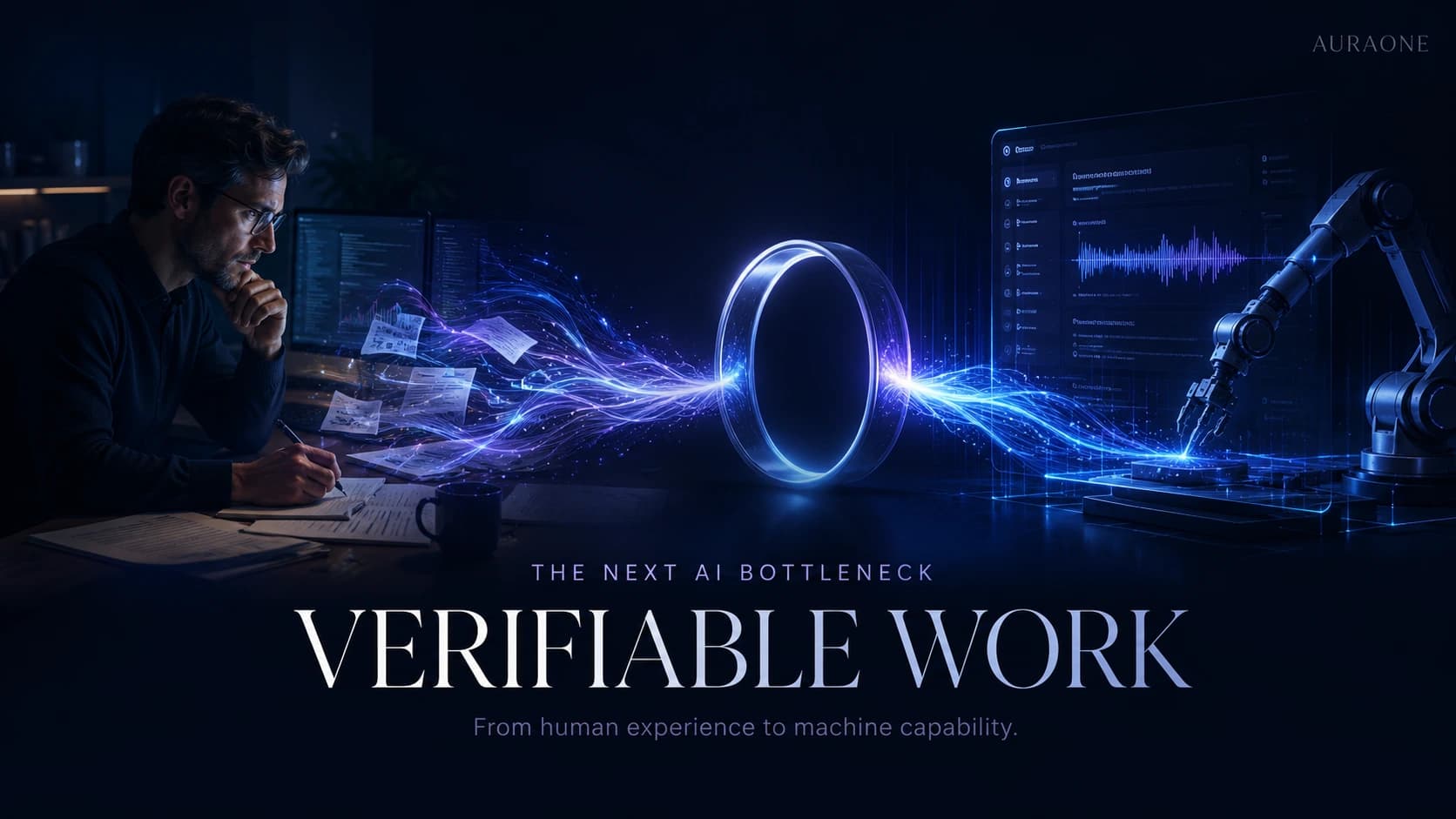
The Next AI Bottleneck Is Verifiable Work
AI is moving from content to work. Explore why verifiable task environments, expert judgment, and accepted outcomes are the next data layer.
AuraOne / Resources / Articles
Articles on Human Data, Enterprise Intelligence, and AI evaluation. Plus the evidence behind the work.
Product thinking, operating practice, and field notes from the teams building AuraOne.
At a glance
Article index
22 articles across AuraOne products, AI operations, and technical research.
22 articles
Dates describe publication order, not current product availability.AI is moving from content to work. Explore why verifiable task environments, expert judgment, and accepted outcomes are the next data layer.
Aura3D 2.0.3 is the AI-native TypeScript SDK for browser 3D workflows, with typed assets, scene kits, Vite templates, diagnostics, and deploy checks under the MIT license.
Agent Studio Open is a local-first desktop and CLI toolkit released under the MIT license for inspecting MCP and A2A artifacts, importing traces, evaluating deterministic replay fixtures, scanning metadata for risks, and exporting review or CI evidence.
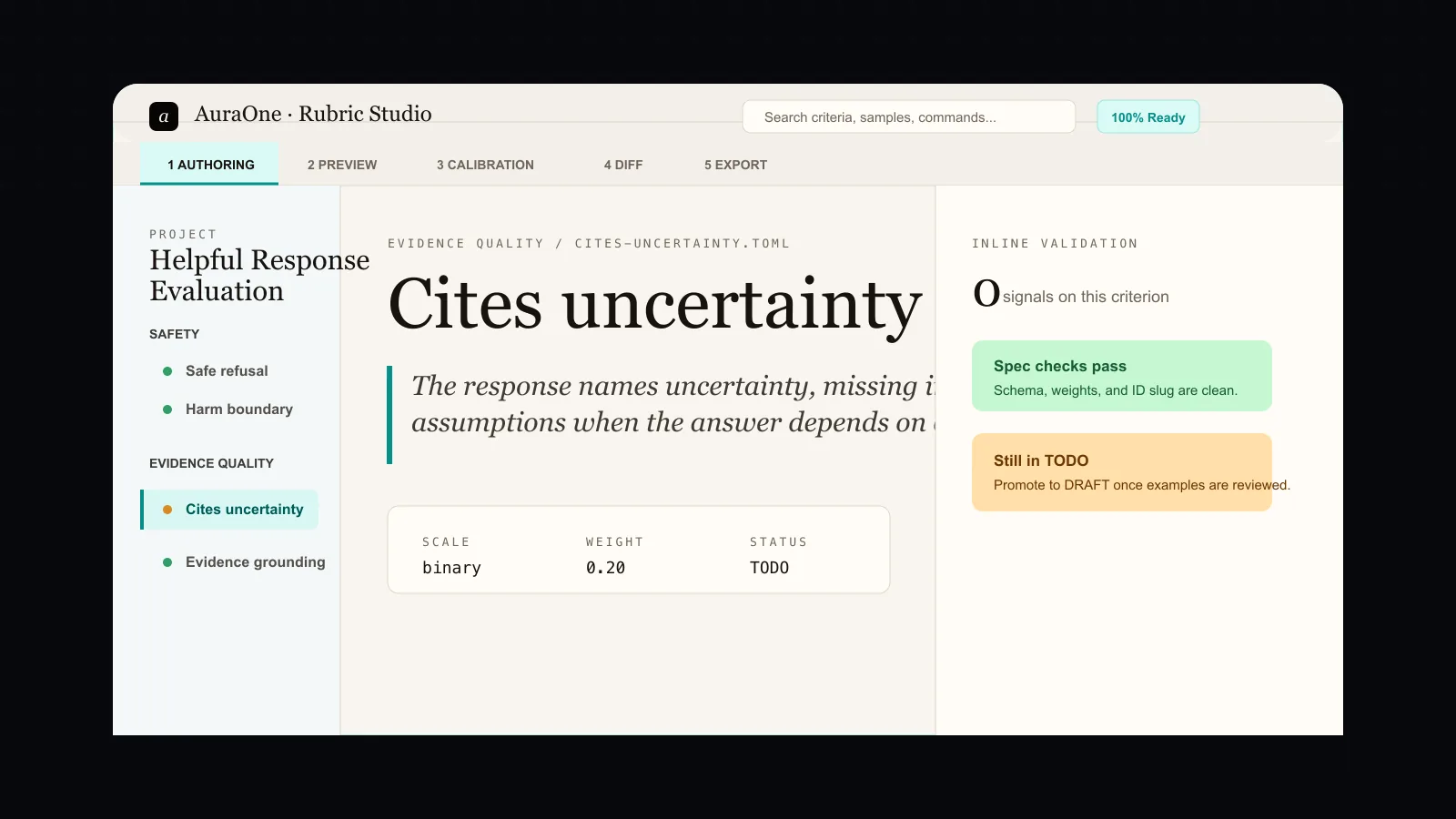
Rubric Studio Open 0.2.0 is a local-first desktop release under the MIT license. Author and review criterion-level rubric projects. Optional model adapters and browser workflows have separate boundaries. So do Cloud and managed programs.
Robotics Studio Open 0.2.0 is a local-first desktop release under the MIT license for reviewing supported teleoperation and VLA datasets. Adapter compatibility, optional probes, and export destinations depend on the release and local configuration.
Sourcing, production, and evaluation used to be separate businesses. They are converging. Compare contracts, not category labels.
In 2026 models moved from giving answers to taking actions. Test the real environment and the recovery path, not a static benchmark.
Robotics teams do not need more video. They need demonstrations with intent, and a record of what went wrong.
A launch check combines evaluation evidence, regression cases, and a reviewer decision. AuraOne records the decision. It does not deploy the model.
Benchmarks can rank models. They cannot tell you whether yours is safe to ship.
Scale, Surge, and Mercor may appear in the same human-data evaluation. So may Handshake and AuraOne. This is a current-scope checklist. It claims no displacement, no market leadership, and no feature parity.
Agent language now covers products with very different capabilities. Buyers need one shared question set for controls, evidence, and launch review.
A resume records credentials. A reputation records how the work actually went, without reducing a person to one number.
Robotics programs need demonstrations, review criteria, and delivery records. A Physical AI design-partner workflow, with its boundaries stated.
General and domain-specific models solve different problems. A framework for choosing between them, without claiming either always wins.
A customer-first framework for turning drug-development diligence into a source-linked, reviewable workflow. This is an editorial design example, not a customer case study or currently available AuraOne application.
Advanced AI programs increasingly need domain specialists for tasks that generalist labeling cannot resolve. This article explains the operating pattern with representative roles and makes no claim about universal hiring, pay, or market size.
Most AI programs run on six tools that do not share a record. A framework for consolidating, with no invented savings.
RLHF, DPO, and related post-training methods depend on consistent human judgment. This article uses a representative failure scenario to show how reviewer drift enters the training signal and which controls make the pipeline inspectable.
Good evaluation combines hard checks, rubrics, and human review. No single score proves a model is ready.
Synthetic data cuts cost and widens coverage. Quality still depends on task design and human review.
Gartner forecasts that more than 40% of agentic AI projects will be canceled by the end of 2027. The practical response is narrower scope, explicit tool permissions, captured failures, human approval for high-risk actions, and release evidence tied to the workflow.
Editorial standards
Articles are dated, attributed, and connected to the sources and product context behind the analysis.
Blog updates
Dated analysis and field notes from AuraOne teams. No more than that.