
ClickAgents
Founded at 16 and sold to ValueClick.
AuraOne / Company
Preparing the company story, the open roles, and how to reach us.
AuraOne / Company / About
AI Data and Enterprise Intelligence.
We create the data AI needs. We work with design partners to define the workflows enterprises repeat and the evidence required before operation.
At a glance
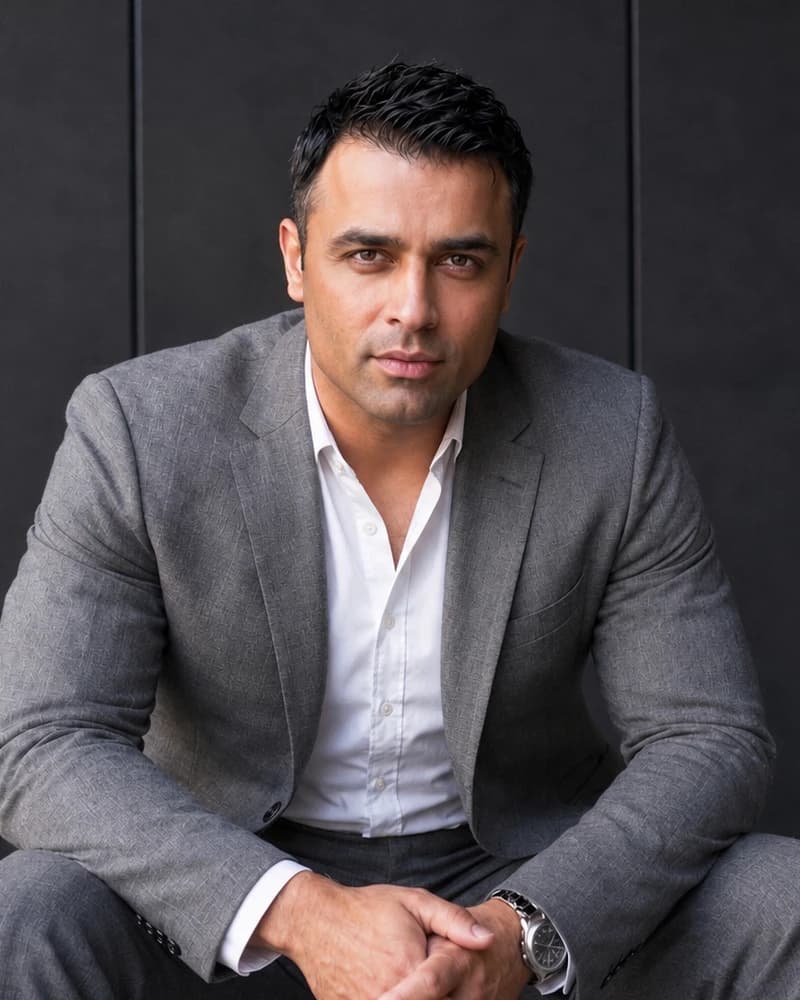

The founder
Gurbaksh Chahal is the Founder and CEO of AuraOne. He started his first company, ClickAgents, at 16 and sold it for $40 million. He went on to build BlueLithium into the fifth-largest advertising network in the United States before Yahoo acquired it for $300 million, then founded RadiumOne, which reached a reported $500 million private valuation. RadiumOne was later acquired by RhythmOne, now part of the Nasdaq-listed company known as Nexxen (NEXN).
Those companies were built around a recurring technical problem: how to organize large volumes of behavioral and relationship data into signals people and systems can use. His 12 issued U.S. patents cover social-graph construction, behavioral modeling, personalization, and contextual analysis. AuraOne carries that work forward for AI—connecting source data, expert judgment, model evaluation, application logic, and accepted outcomes.
Gurbaksh is the author of The Dream, an international bestseller published by St. Martin's Press and translated into more than a dozen languages. His recognition includes Ernst & Young Entrepreneur of the Year in 2013 and an honorary doctorate in commercial science from Pace University.
A record of building
The numbers matter because they show a sustained ability to build, scale, invent, and deliver—not because AuraOne is trying to repeat an advertising company.
Founded at 16 and sold to ValueClick.
Built into the fifth-largest U.S. ad network and acquired by Yahoo.
Reported peak private valuation; the company later entered the public-company lineage now known as Nexxen (NEXN).
A portfolio spanning social graphs, behavioral signals, and personalization.
Bring the people, systems, and decisions around AI work into one connected operating path.
Input
Work
Output
How we got here
AuraOne joins a longer history of building data systems at scale with a newer body of work on AI data, reviewable decisions, and intelligence that compounds.
Founded at 16 and sold to ValueClick for $40 million two years later.
Built into the fifth-largest U.S. advertising network before Yahoo acquired it for $300 million in 2007.
Founded around social signals, graph intelligence, and programmatic advertising; later reached a reported $500 million valuation. The company was acquired by RhythmOne, which is now part of Nexxen (NEXN).
U.S. inventions spanning social graphs, open-web behavior, personalization, and contextual analysis.
Human Data and Enterprise Intelligence connect expert work, reviewed decisions, and accepted outcomes into one compounding system.
Beyond business
In 2012, Gurbaksh founded The Chahal Foundation after the Oak Creek Sikh temple attack and committed $1 million to launch #BeProud. The Foundation grew from an anti-hate campaign into work across education, scholarships, child protection, food security, safety and justice, and emergency response.
That work reflects the same operating belief behind AuraOne: important systems should be built with accountability, dignity, and measurable follow-through.
Visit The Chahal FoundationThe operating standard
Trust is earned in the details: a clear promise, a named owner, work that can be reviewed, and a commitment honored when it is due.
Customers know what is being delivered, how quality will be judged, who owns the outcome, and what happens next.
Partners know where they fit, what they own, how decisions are made, and how shared work moves from introduction to delivery.
Employees see the mandate, reporting line, ownership, compensation scope, and hiring process before they commit.
Specialists and contractors receive the rate, acceptance criteria, payment method, and payment schedule in writing before work begins. Accepted work is paid to that schedule.
The principles that shape how we build products and run customer programs.
01
Understand the user, source material, decision, and desired result.
Program brief
02
Keep criteria, judgment, disagreement, and approval easy to inspect.
Quality review
03
Keep source material, versions, owners, and decisions together.
Program context
04
Give customers the outputs, documentation, and next steps they need.
Customer handoff
Company directory
Find career, partnership, and press information.